Tummy Tuck Surgery (Abdominoplasty): Complete Guide to a Flatter, Firmer Abdomen
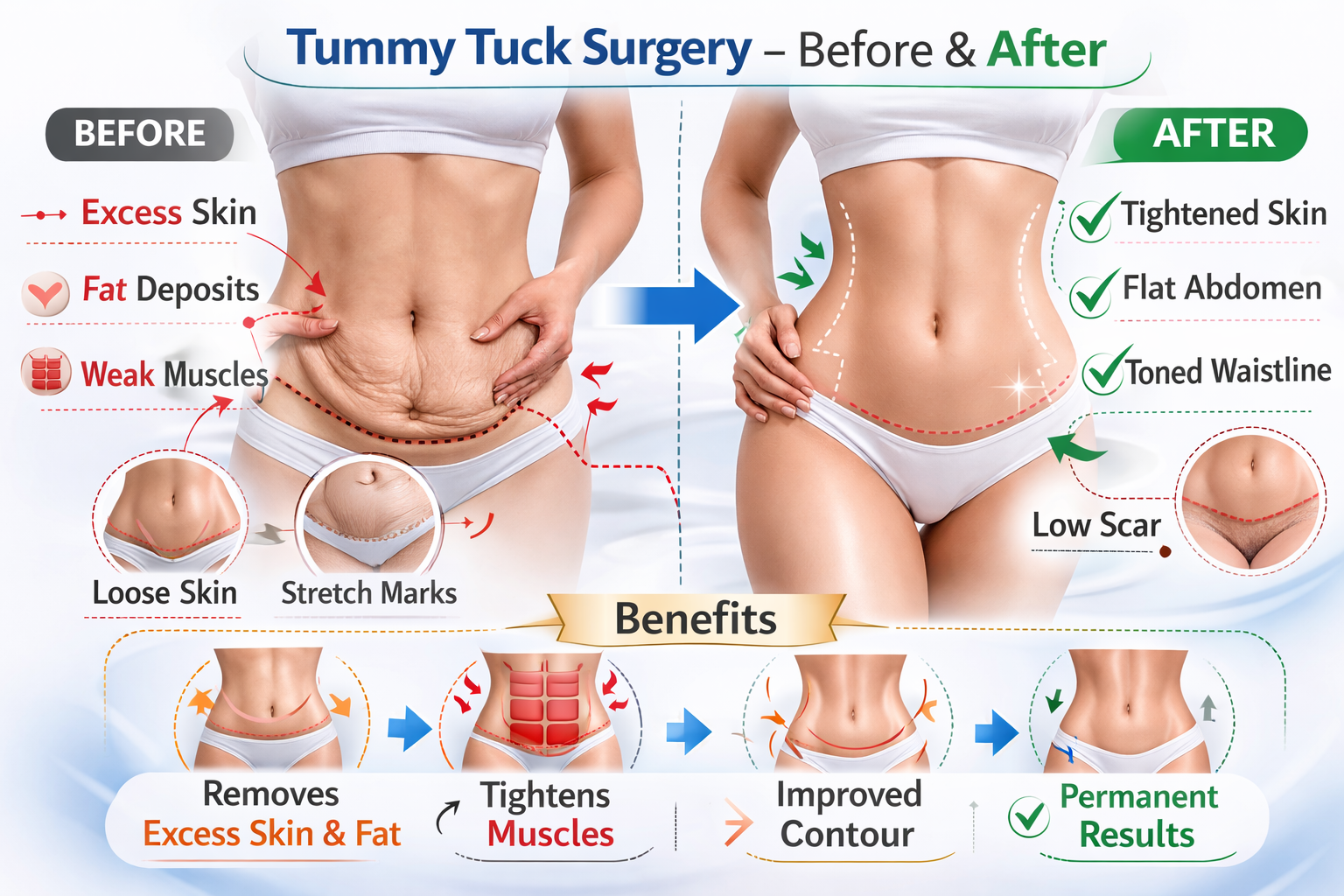
A tummy tuck, medically known as abdominoplasty, is a popular cosmetic surgical procedure designed to remove excess skin and fat from the abdomen while tightening weakened abdominal muscles. It helps create a smoother, firmer, and more toned midsection—especially for individuals who struggle with loose skin after pregnancy, major weight loss, or aging.
If diet and exercise are not enough to achieve your desired abdominal contour, a tummy tuck may be an effective solution.
What is a Tummy Tuck?
A body contouring surgery that reshapes and flattens the abdominal area. During the procedure, the surgeon removes excess skin and fat and tightens separated abdominal muscles (a condition called diastasis recti).
Unlike liposuction, which only removes fat, a tummy tuck addresses both loose skin and muscle laxity for more comprehensive results.
Types of Tummy Tuck Procedures
Depending on the patient’s needs, different types of tummy tuck surgeries are available:
1. Mini Tummy Tuck
This procedure focuses on the lower abdomen (below the belly button). It is ideal for patients with mild skin laxity and minimal muscle separation.
2. Full Tummy Tuck
A full tummy tuck treats both the upper and lower abdomen. It includes muscle tightening and repositioning of the belly button for a natural look.
3. Extended Tummy Tuck
This advanced procedure targets excess skin and fat in the abdomen as well as the flanks (love handles), often recommended after massive weight loss.
Who is a Good Candidate?
You may be a suitable candidate for surgery if:
You have loose or sagging abdominal skin
Your abdominal muscles are stretched or separated
You are close to your ideal body weight
You are physically healthy and a non-smoker
You have realistic expectations about the results
Women planning future pregnancies are usually advised to postpone the procedure.
The Tummy Tuck Procedure
Surgeons typically perform tummy tuck surgery under general anesthesia, and the procedure usually takes 2–4 hours depending on its complexity.
During the procedure:
The surgeon makes an incision along the lower abdomen.
The surgeon removes excess skin and fat.
The surgeon tightens weakened abdominal muscles.
The surgeon pulls the remaining skin downward and closes the incision with sutures.
The surgeon may reposition the belly button to create a natural appearance.
After surgery, patients wear a compression garment to support healing and reduce swelling.
Recovery and Healing Timeline
Recovery varies from person to person. Most patients can return to light activities within 2 weeks, while full recovery may take 6–8 weeks. Swelling and mild discomfort are common during the initial weeks.
Patients are advised to avoid heavy lifting and intense exercise until cleared by their surgeon.

Benefits of Tummy Tuck Surgery
Flatter and firmer abdomen
Improved body contour and waistline
Strengthened abdominal muscles
Removal of excess skin after weight loss or pregnancy
Enhanced confidence and posture
Risks and Considerations
As with any surgical procedure, tummy tuck surgery carries potential risks such as infection, scarring, bleeding, or delayed healing. Choosing a qualified and experienced plastic surgeon significantly reduces these risks.
It is important to maintain a stable weight after surgery to preserve long-lasting results.
Final Thoughts
A tummy tuck is a transformative cosmetic procedure that restores abdominal firmness and enhances body confidence. If you are struggling with excess skin or weakened abdominal muscles despite healthy lifestyle efforts, consulting a skilled plastic surgeon can help you determine the best treatment plan.
Schedule a consultation today to explore whether tummy tuck surgery is right for you and take the first step toward achieving a more sculpted and confident appearance